Carbon capture & storage
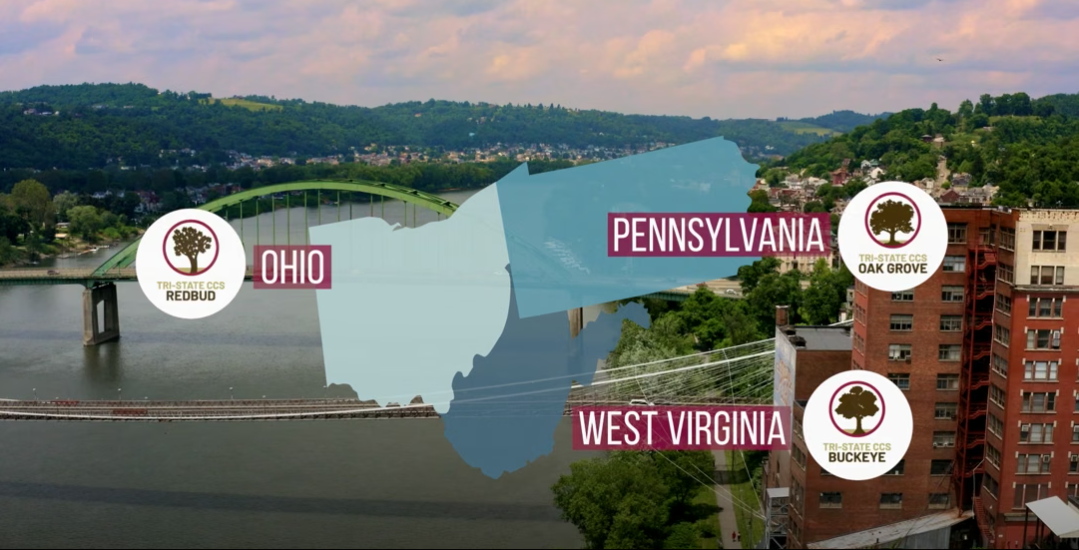
Tenaska has been active in six counties across Ohio, Pennsylvania and West Virginia since 2022, promoting carbon capture and storage (CCS) as a management solution for carbon dioxide (CO2) emissions while also compensating landowners for subsurface rights. Applications have been submitted for 30 CO2 injection wells across the footprint.
CCS helps manufacturers, industrial producers and power plants meet environmental requirements and climate goals in a cost-effective, responsible manner. This allows these businesses to remain stable employers and taxpayers in the region. At the same time, CCS projects like Tri-State bring economic benefits to the community during construction and operation.
How it works
CCS involves the capture of CO2 emissions produced by these facilities before they enter the atmosphere. The captured CO2 is liquified, transported and permanently stored deep underground. The CO2 naturally mineralizes and dissolves over time.
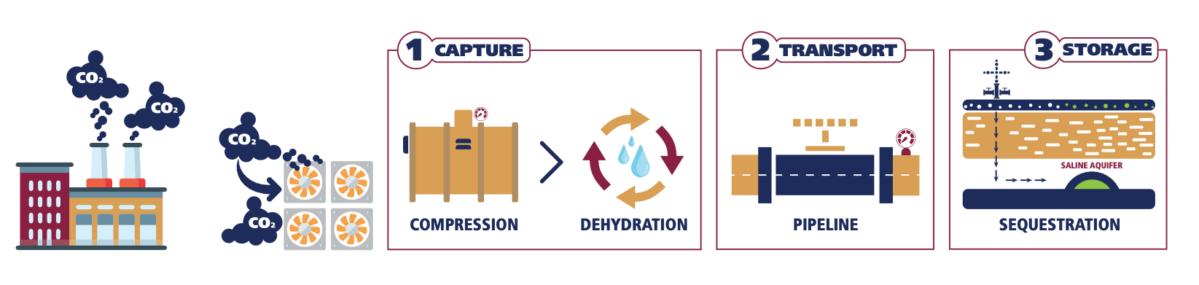
How CCS captures emissions
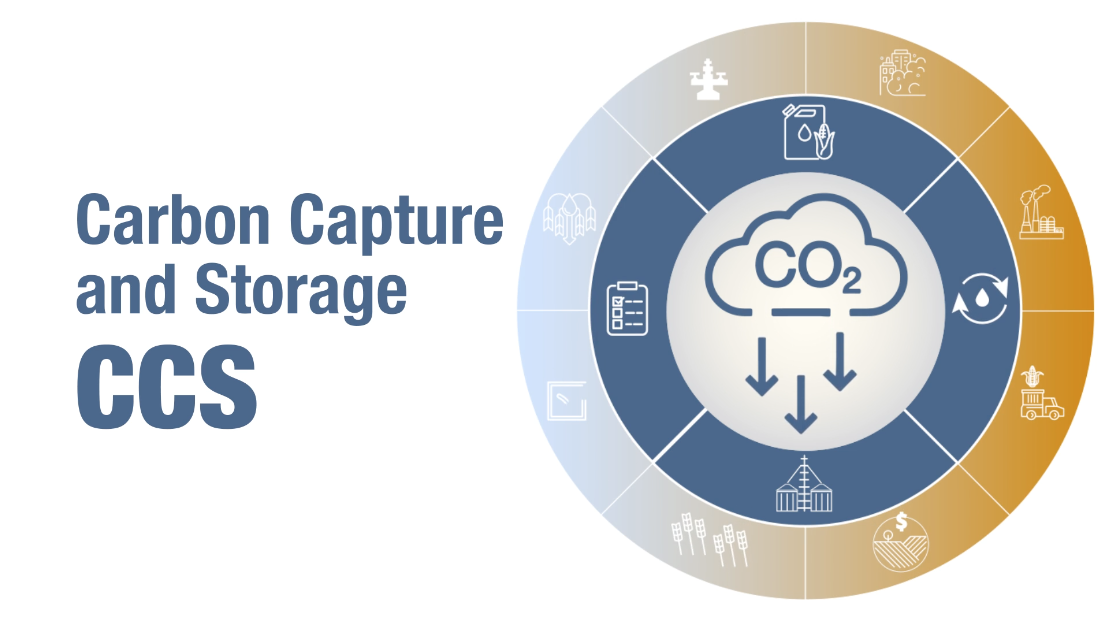
CCS is a safe and environmentally responsible solution for businesses to manage their carbon dioxide emissions. At the same time, it provides economic benefits to landowners and communities. Learn more about CCS in this video.
A thorough permitting process
There are a number of local, state and federal permits needed for the Tri-State Energy Hub to come to fruition.
Of note, the U.S. Environmental Protection Agency will need to issue the Class VI permits for the CCS wells in Ohio and Pennsylvania, with West Virginia Department of Environmental Protection on point in that state. As part of that process, the permitting agency conducts a detailed technical and environmental review to ensure the proposed well sites meet all requirements for the safe, long-term storage of carbon dioxide. The permitting agency will first issue a permit to construct the project, and then we would need to further demonstrate the built project is sound before receiving a permit to operate.
Other permits will cover such things as wetlands, wildlife, stormwater, pipeline routing, road use and more.
Committed to safety
CCS is a safe, environmentally responsible solution to managing CO2 emissions. CO2 is incombustible. It can be safely transferred through pipelines to injection wells into geologically secure storage areas. Injection wells are rigorously permitted, with strict standards for the siting, operation, testing and long-term maintenance of the wells. Learn more about CCS safety in this video.
Common questions
Is CCS a new technology?
No. According to the Global CCS Institute, CCS projects have been operating since the mid-1990s with proven results. Today, there are 77 operational CCS facilities in the world, with 47 in construction and more than 600 others in development.
How does a CCS project impact above-ground land use?
A CCS project utilizes pore space deep below ground for CO2 storage. Except for the relatively small number of above-ground injection wells, monitoring equipment and monitoring wells, nothing changes above the surface. Landowners can continue to use their land just as they always have.
Can CCS impact drinking water?
The U.S. Environmental Protection Agency (EPA) has developed extensive criteria to ensure that carbon storage does not threaten underground drinking water. These requirements address: siting, construction, operation, testing and ongoing monitoring. Sequestered CO2 is stored deep underground (3,000-12,000 feet), far below the water table (350 feet), and it is sealed in place by thick layers of caprock. Seismic imaging will be used to determine the location of the CO2 in the storage field and deep monitoring will confirm no CO2 is migrating upward. Shallow groundwater monitoring wells will ensure local drinking water is protected.
Is CCS safe?
Yes, CO2 is incombustible, which means it can be safely transferred through pipelines to injection wells into geologically secure storage areas. Injection wells are rigorously permitted with strict standards for the siting, operation, testing and long-term maintenance of the wells.
What happens if there’s a leak?
The deep underground storage sites where CO2 is being injected are chosen specifically for their proven geologic ability to hold water, oil or gas for millions of years. The CO2 will reside in porous rock and is sealed in place by a layer of caprock. These storage sites are monitored 24/7, 365 days a year by pressure sensors that can detect upward migration of CO2 and immediately implement measures to address it. If this happens, we will — as required by our permits — stop CO2 injection.
We will then work to identify and repair the leak. In these rare instances, leaks generally are found in the casing near the injection site and are easy to repair. Regardless, we will work with local first responders to ensure they have the training and equipment needed to respond to any unexpected situations related to this project.
Can carbon dioxide storage sites or pipelines explode?
CO2 is neither explosive nor flammable.
Is carbon dioxide hazardous?
CO2 is an inert gas that occurs both naturally and as a byproduct of industrial processes. It is non-flammable. CO2 is exhaled when humans breathe out and is emitted into the atmosphere at refineries, manufacturing facilities and power plants. Due to environmental regulations and climate mandates, these businesses must reduce their CO2 emissions. At extremely high concentrations, CO2 temporarily displaces oxygen. However, CO2 dissipates very, very quickly.
Is CCS regulated?
Yes. CCS storage fields are regulated by the EPA’s Underground Injection Control Program. This program sets and monitors regulations for injection well siting, construction and operation to ensure drinking water and human health are protected. The U.S. Department of Energy (DOE) also oversees development and technology field testing to ensure that the regulations relating to the safe storage of CO2 underground are met. Additionally, CCS pipelines must meet requirements laid out by the Pipeline and Hazardous Materials Safety Administration (U.S. Department of Transportation).
How will the storage fields be maintained long-term to ensure safe operation?
The facilities will have maintenance personnel. The workers will perform line locates, monitoring and maintenance and, if required, emergency response.
The storage fields will have continuous monitoring to alert us to changes in pressure or other anomalies that would indicate a leak. It will also alert us to the upward migration of CO2 well before it reaches the water table or the surface. If this happens, we will — as required by our permits — stop CO2 injection. We will then work to identify and repair the leak. In these rare instances, leaks generally are found in the casing near the injection site and are easy to repair.
In the rare instance that CO2 leaves the storage fields, it will travel into other deep formations. The robust design features of the storage fields and its deep, deep underground location will prevent CO2 from reaching the groundwater level or the surface.
Are the pipelines used to transport carbon dioxide safe?
Pipelines continue to be the safest means of transport, with over 5,000 miles of CO2 pipeline infrastructure in operation across the United States today. There have been only a few instances of leaks on these lines, with the most notable being in Mississippi in 2020. There are a number of design and operational specifications that distinguish our project. The CO2 that we will transport will be 98% pure. In the well-documented incident in Mississippi, the pipeline also contained hydrogen sulfide in levels harmful to humans that aggravated the impacts of the release.
What additional standards are in place to ensure safety and efficiency?
Our carbon dioxide pipelines will be designed to exceed federal safety requirements and the operating standards of other carbon projects already in operation. The carbon dioxide transported will be required to be a very pure stream of CO2 coupled with additional on-site purification equipment to ensure we are reaching the threshold of 98% pure product.
Another distinguishing design factor is component parts, as we are using a stronger composition of carbon steel that can better withstand external stresses than was previously required.
How do we know your pipelines won’t rupture?
There are more than 5,000 miles of active CO2 pipelines in the U.S. today. Modern pipelines are incredibly safe. In most instances of pipeline failure, the fault lies with third-party damages, such as someone digging a deep hole and rupturing the pipeline. These pipelines will have warning tape.
In addition, these pipelines will be monitored to detect corrosion. It will have constant monitoring and use real-time data so we can shut down the pipeline immediately if we detect a pressure drop or other anomaly that might indicate a problem. We’ll have the ability to locate where the problem is, dispatch crews to the site, determine the extent of the problem and begin any necessary repairs.