Power generation
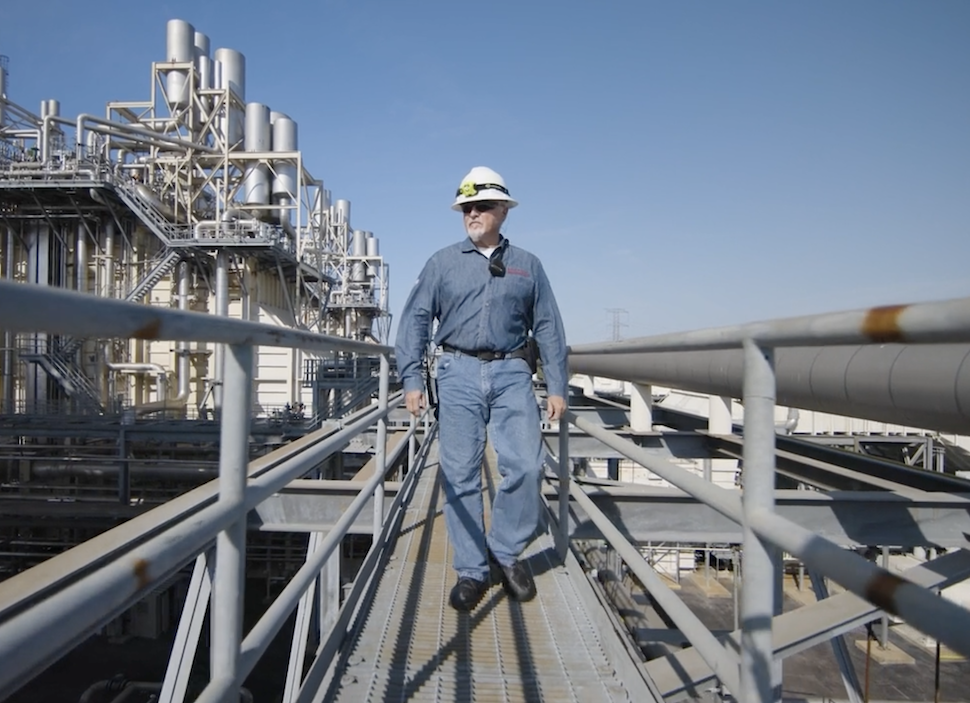
Natural gas remains the cleanest fossil fuel for dispatchable and reliable power generation, and the market need for natural gas generation is growing amid increased energy demand from reshoring of manufacturing, population growth, dater centers and other large power users.
The regional grid operator — PJM Interconnection — is facing unprecedented demand and has warned of generation shortfalls that could impact its ability to maintain reliable service for Ohio and 12 other states. The Tri-State power plant can help ease this burden.
The proposed natural gas-fueled power plant will be located within the CCS project, on land we’ve secured in Saline Township, Jefferson County, Ohio. As currently envisioned, the combined-cycle facility would be able to generate up to 1,700 megawatts, enough to reliably power approximately 1.7 million homes.

Committed to protecting public health and the environment
There are a number of local, state and federal permits needed for the Tri-State Energy Hub to come to fruition. For the power plant, the Ohio Power Siting Board will need to issue a Certificate of Environmental Compatibility and Public Need, and the Ohio Environmental Protection Agency will issue air and water permits. Ongoing monitoring and compliance will ensure the facility meets established standards intended to protect human health and the environment.
Other permits will cover such things as wetlands, wildlife, stormwater, pipeline routing, road use and more.
Common questions
Why did you select Jefferson County as a site for a power plant?
Tenaska has been developing a carbon capture and storage (CCS) project in this area for the past few years.
Due to the positive reception to our proposed CCS project and to promising discussions with potential customers, we are expanding the Tri-State project to include a natural gas-fueled power plant.
We’ve always considered CCS to be an enabler — as an emissions solution for existing industry and as an attractor for new business investment. Tenaska’s robust development experience allows us to propel this concept and meet a growing need for new sources of reliable power generation through the addition of a power plant.
Will the natural gas to run the plant be sourced locally? Will you have gas wells on site?
We intend to obtain natural gas from the major natural gas pipelines already present in the area. We do not intend to have gas wells on site.
Is there a customer for the power (power purchase agreement / offtaker)?
Tenaska has not finalized an offtake contract for this project, as these types of agreements typically come later in development. There is a significant need in the market for natural gas projects that can provide reliable energy and help meet increased electric demand in the region.
What permits and approvals are needed to bring this project to fruition?
The Tri-State power plant project cannot move forward until it has received all required local, state and federal permits, which may include:
- Ohio Certificate of Environmental Compatibility and Public Need (Ohio Power Siting Board)
- Permit to Install and Prevention of Significant Deterioration (PSD) Air Quality Permit (OEPA)
- Title V Operating Permit (OEPA)
- National Pollutant Discharge Elimination System (NPDES) Wastewater Discharge Permit (OEPA)
- Clean Water Act Section 404 and Section 10 Permits (USACE) for wetland and navigable water impacts
- Ohio Water Withdrawal Consumptive Use Permit and Facility Registration (ODNR)
- Construction stormwater general permit (OEPA) and Jefferson County Storm Water Pollution Prevention Plan (SWPPP) review
Pending all the required permits, the earliest construction start would be in 2028, with the earliest operations in 2032 or 2033.
How can the public comment and/or ask questions in regard to the project?
Tenaska understands the importance of two-way communication about the project and the need to be responsive to questions. At any time, questions can be directed to our local representative Ben Keeler at community@tristateccs.com or 330-934-4155. Ben is also available at our local development offices.
- 108 S. Main St.
Cadiz, OH 43907
Office hours: 2 to 5 p.m. Thursdays - 210 Three Springs Drive, Suite 2
Weirton, WV 26062
Office hours: 10 a.m. to 1 p.m. Thursdays
Additionally, there will be defined public comment processes as part of the various approvals needed for this project to move forward. Information will be publicized when those opportunities arise.
Will Tenaska continue to pursue the carbon capture and storage hub?
Yes. We are still working through our Class VI applications with the U.S. Environmental Protection Agency for our Ohio wells and with the West Virginia Department of Environmental Protection for wells there. This is a lengthy and thorough process.
In addition, the Tri-State participates in a CarbonSAFE Phase III project awarded by the U.S. Department of Energy’s (DOE) Office of Fossil Energy and Carbon Management (FECM). Coordination with DOE is underway, and this funding of up to $69 million ($55.2 million in funding and $13.8 million in cost share) over three years supports the characterization and permitting efforts to develop a CCS hub in this region.
Will the gas plant be connected to the carbon capture and storage hub?
The proposed power plant will be located within the CCS footprint, on land we have acquired adjacent to a proposed carbon dioxide (CO2) injection well site in (Saline Township) Jefferson County, Ohio.
We expect to build the Tri-State Energy Hub in phases. As a result, we have the flexibility to fully integrate the power plant and the CCS portion of the project, or to advance these independently.
What will neighbors see and hear?
Once complete, the power plant will encompass approximately 50 acres of the 560-acre site. (If carbon capture is included, the facility would occupy an additional 40 acres.) The remainder will be used as buffer. Existing trees and the natural topography of the area will help mitigate viewshed and sound impacts.
The combustion turbine generators and other major equipment will be enclosed and include sound attenuation equipment to reduce the sound of plant operation.
Outdoor lighting at the facility would be pointed downward and inward. Neutral paint colors and landscaping will enhance the aesthetic look of the facility.
Will the project use union labor?
Tenaska will hire an Engineering, Procurement & Construction (EPC) contractor to oversee construction and hire the contractors. We recognize the strong union workforce in this area, and we will encourage our EPC contractor to build those relationships.
Interested contractors and vendors can submit their information here.
How will the broader tri-state region benefit from the power plant in Jefferson County, Ohio?
The Tri-State Energy Hub would generate significant economic benefits for landowners and communities across the region during construction and operation, including jobs, landowner payments, tax revenue and opportunities for contractors and vendors.
The CCS portion of the project is estimated to have a $1 billion economic impact in the tri-state region.
We are kicking off an economic impact study to quantify the economic benefits of the power plant, beyond the stability and reliability that Tri-State will bring to the power grid that serves this region.
Where will the water supply come from?
The amount of water needed will be dependent on final plant design and chosen technology; however, water use for the combined-cycle power plant is anticipated to average 12-15 million gallons per day. Tenaska is currently evaluating the water supply options.
What will the facility do with its wastewater?
The plant will need to obtain a water discharge (National Pollutant Discharge Elimination System, or NPDES) permit from the Ohio Environmental Protection Agency to discharge wastewater. The permit will establish effluent limits and monitoring requirements. Tenaska will be responsible for ensuring compliance with the permit. Average daily discharge is anticipated to be about 3 million gallons per day. Tenaska is currently evaluating potential discharge locations.
What will be done to ensure human health and safety?
Safety is of utmost importance to Tenaska, and we work hard to design a safe plant that is protective of the employees, residents and wildlife. This has been demonstrated through the safe operation of the Tenaska fleet, which encompasses 7,700 megawatts of generation.
Our power plants have received dozens of awards from the National Safety Council, and the majority of our facilities have been named Voluntary Protection Program (VPP) Star Worksites by the U.S. Occupational Safety and Health Administration — a recognition obtained by only 0.03% of work sites (3 in every 10,000), demonstrating our strong safety culture.
The Ohio Environmental Protection Agency has requirements related to air quality and natural gas power plants, including compliance with ambient air quality standards. Our facility will be designed, built and operated in compliance with these standards, which are intended to be protective of human health and the environment.
How will you manage construction traffic?
Construction will cause some temporary traffic disruption, but we want to minimize the impact on county residents and motorists.
Prior to construction, the project will develop a detailed traffic management plan that takes into account Tenaska’s strong commitment to safety and local concerns around busy intersections, timing of construction traffic around school and other peak times, road conditions and other factors.
During construction, the project would have a traffic management plan to ensure roads are maintained, to reduce traffic congestion and to mitigate dust and other construction impacts.
We expect to have a road use agreement and bond with both Jefferson County and Saline Township.
Our approach
Tenaska has been developing natural gas-fueled power plants for nearly 40 years. We have a reputation for being a good business neighbor, working with communities to mitigate project impacts and maximize local benefits.
Watch this video to learn more about our approach to siting and development of natural gas-fueled power plants.